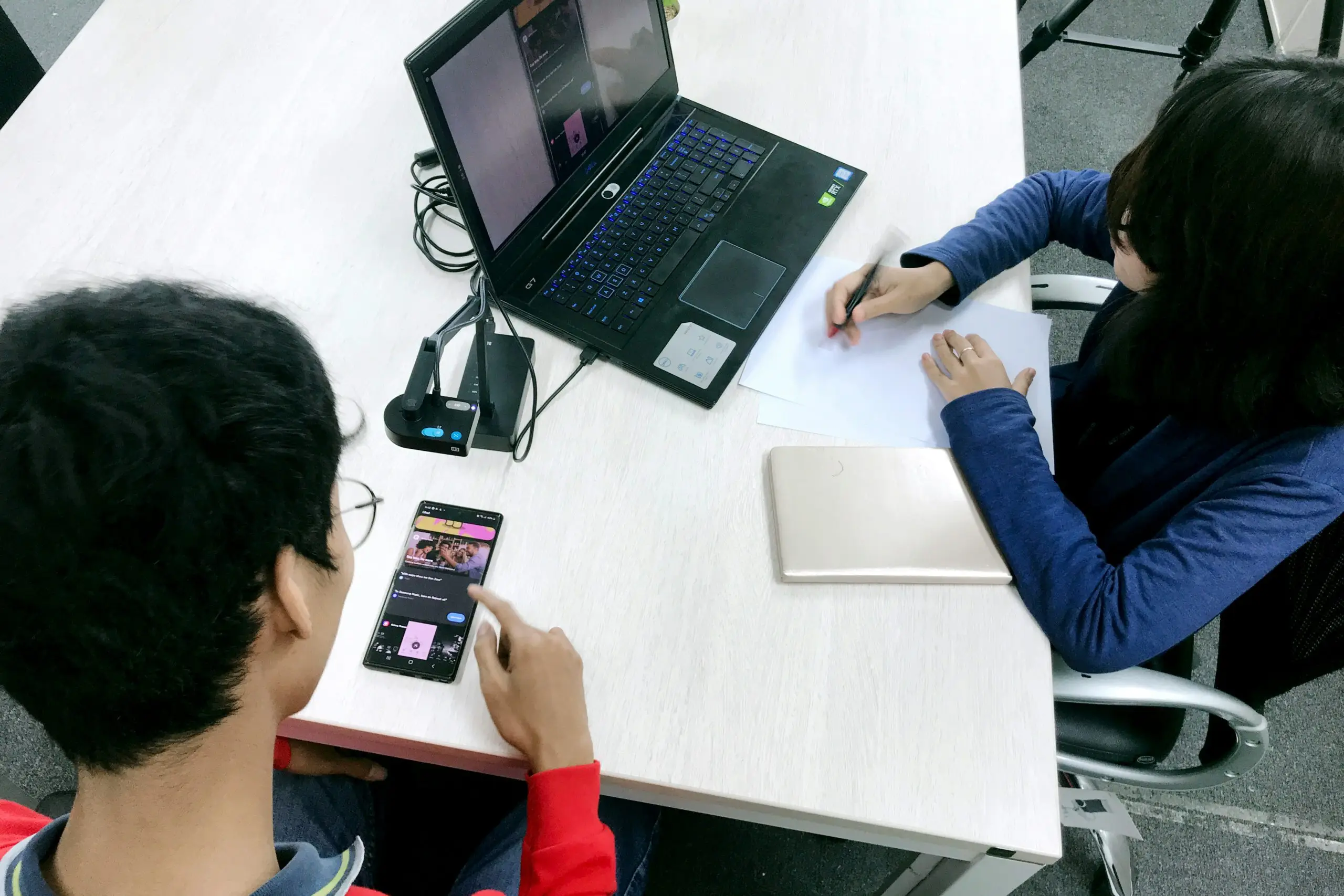


UpTop helps organizations validate product decisions through structured usability testing that uncovers friction, confusion, and unmet expectations before significant investments are made. Whether evaluating an early concept, prototype, existing application, or newly released product, usability testing reduces risk, improves decision-making, and ensures digital experiences are intuitive, effective, and aligned with user needs.
Validate User Experiences Before You Build, Launch, or Invest
UpTop helps organizations validate product decisions through structured usability testing that uncovers friction, confusion, and unmet expectations before significant investments are made. Whether evaluating an early concept, prototype, existing application, or newly released product, usability testing reduces risk, improves decision-making, and ensures digital experiences are intuitive, effective, and aligned with user needs.
The Challenge
Without observing real users interacting with a product, teams often miss confusing workflows, unclear navigation, inefficient processes, and barriers that prevent users from completing important tasks. These issues can reduce adoption, increase support requests, slow employee productivity, and negatively impact customer satisfaction.
Usability Testing provides objective evidence that helps teams validate design decisions, identify usability problems early, and prioritize improvements before they become costly business problems.
Common challenges include:
- Uncertainty about whether users can successfully complete critical tasks
- Product decisions based on assumptions instead of observed user behavior
- Low adoption due to confusing interfaces or workflows
- High support costs caused by avoidable usability issues
- Difficulty prioritizing UX improvements before development or release
- Stakeholder disagreement about what should be improved
- Limited visibility into where users experience frustration or confusion
- Increased risk of launching products that fail to meet user expectations
Benefits of Usability Testing
Our Approach
Our Approach
Define Testing Objectives
Develop & Test Plan
Conduct Moderated or Unmoderated Testing
Analyze Findings
Deliver Improvements
Traditional Usability Testing vs. R.I.T.E.
Traditional usability testing typically completes a defined round of research before findings are analyzed and recommendations are made. Rapid Iterative Testing and Evaluation (R.I.T.E.) takes a more iterative approach. Teams identify significant usability issues, make targeted changes, and test those changes with subsequent participants during the same testing cycle.
Both approaches provide evidence from real users. The difference is how quickly that evidence is translated into product improvements.
| Traditional Usability Testing | R.I.T.E. | |
| Primary Goal | Identify and prioritize usability issues | Identify, improve, and retest usability issues rapidly |
| Testing Approach | Complete testing sessions before making significant changes | Make targeted changes between testing sessions when evidence supports them |
| Participants | Often 5–8 participants per primary user group complete the same or substantially similar experience before findings are synthesized | Often uses smaller groups across multiple rounds, with subsequent participants testing revised versions as the experience evolves |
| Learning Cycle | Test → Analyze → Recommend | Test → Learn → Improve → Retest |
| Speed of Iteration | Improvements typically follow the completed study | Improvements can be evaluated during the study |
| Best Suited For | Benchmarking, broader evaluation, validation, and research requiring a consistent test experience | Prototypes and products where teams can make rapid changes during testing |
| Stakeholder Involvement | Stakeholders typically review synthesized findings after testing | Product, design, research, and development teams may collaborate throughout testing |
| Typical Result | Prioritized findings and recommendations for future improvements | Prioritized findings plus evidence about whether iterative changes improved the experience |
| Participants | Structured discussions, prioritization exercises, consensus building, decision frameworks | Brainstorming, design thinking exercises, sketching, co-creation, concept evaluation |
Deliverables May Include
Who This is For
Who This is For
This service helps organizations reduce uncertainty by validating that products are intuitive, efficient, and aligned with user expectations before launch or major implementation efforts.
This service is particularly valuable for organizations that want to:
- Validate prototypes before development
- Evaluate existing products for usability improvements
- Improve customer or employee experiences
- Reduce implementation and launch risk
- Increase product adoption and user satisfaction
- Prioritize UX improvements using objective evidence
- Support modernization initiatives with user validation
- Make confident product and design decisions backed by user behavior
Why UpTop
By combining usability research with UX strategy, product design, and modernization expertise, we help organizations understand not only where users struggle, but why those issues occur and how they affect adoption, efficiency, and business performance.
The result is greater confidence that your products and digital experiences are intuitive, effective, and ready to support both user needs and business objectives.
Frequently Asked Questions
What is Usability Testing?
Usability Testing evaluates how real users interact with a product, prototype, website, application, or workflow. By observing users as they complete representative tasks, teams can identify friction, confusion, unmet expectations, and opportunities to improve the experience.
When should we conduct Usability Testing?
Usability Testing can provide value throughout the product lifecycle—from evaluating early concepts and prototypes to validating an experience before launch or identifying problems in an existing product. Testing earlier can help uncover costly issues before significant development investment is made.
What can we test with Usability Testing?
Testing can evaluate websites, applications, software products, prototypes, workflows, new features, navigation structures, and other interactive digital experiences. The approach and tasks are tailored to what your team needs to learn.
Do we need a finished product before conducting Usability Testing?
No. Testing can begin with concepts, wireframes, or interactive prototypes before development is complete. Early testing is often particularly valuable because teams can validate important design decisions while changes are still relatively inexpensive to make.
How are participants selected for Usability Testing?
Participants are recruited to reflect the users or audience relevant to the product and research objectives. Appropriate participant criteria are established as part of the testing plan so findings reflect the people the experience is intended to serve.
How many users do we need for Usability Testing?
The appropriate number depends on the product, audience, research questions, and complexity of the experience. UpTop determines the testing approach and participant requirements based on the specific questions the research needs to answer rather than relying on an arbitrary sample size.
What happens during a usability test?
Participants are typically asked to complete realistic tasks while a researcher observes how they navigate the experience, where they encounter difficulties, and how they interpret what they see. Follow-up questions can provide additional insight into their expectations, decisions, and reactions.
What do we receive after Usability Testing?
Deliverables may include a usability findings report, prioritized issues, participant observations, task results, supporting evidence, and actionable recommendations. Findings are organized to help teams understand both what should be improved and why.
How are usability issues prioritized?
Issues can be evaluated based on factors such as severity, frequency, impact on task completion, user frustration, and business importance. Prioritization helps teams focus first on problems most likely to affect the success of the experience.
How is Usability Testing different from a UX Audit?
Usability Testing gathers direct evidence by observing representative users interacting with an experience. A UX Audit primarily uses expert evaluation to identify usability, accessibility, consistency, and experience issues. The two methods can also complement one another when both expert analysis and direct user evidence are valuable.
Let's Talk
Let's Talk
Tell us about your project and we can discuss what journey mapping might look like for you.