



Many organizations invest significant time and resources into customer journey mapping, only to treat the finished artifact as the end goal rather than the beginning of meaningful change.
The reality is that a customer journey map is most valuable when it becomes an operational tool for continuous improvement. It should inform decisions about product strategy, service delivery, workflow optimization, technology investments, and customer experience modernization.
For technology-enabled services organizations and mid-market enterprises, journey maps are particularly important because they help reveal where digital friction, process inefficiencies, and disconnected systems create obstacles for both customers and employees.
A completed journey map is not simply a visualization of the customer experience. It is a blueprint for modernizing the digital ecosystem that supports that experience.
The Real Value of Customer Journey Mapping
A well-developed customer journey map captures more than customer touchpoints. It provides a shared understanding of how people interact with your products, services, systems, and teams.
Journey maps typically document:
- Key stages in the customer lifecycle
- Customer actions and decision points
- Emotional highs and lows throughout the experience
- Questions customers ask at each stage
- Pain points, barriers, and moments of friction
- Internal processes and systems that influence outcomes
When viewed through a modernization lens, these insights become powerful indicators of where organizations should focus their transformation efforts.
For example, a customer pain point may not be caused by a poorly designed interface. It may stem from fragmented data, manual workflows, inconsistent service processes, or legacy technology limitations.
This is where journey mapping becomes more than a UX exercise. It becomes a strategic tool that helps organizations connect customer experience challenges to operational realities.
The goal is not simply to improve individual interactions. It is to create more seamless, scalable experiences that support both business objectives and user needs.
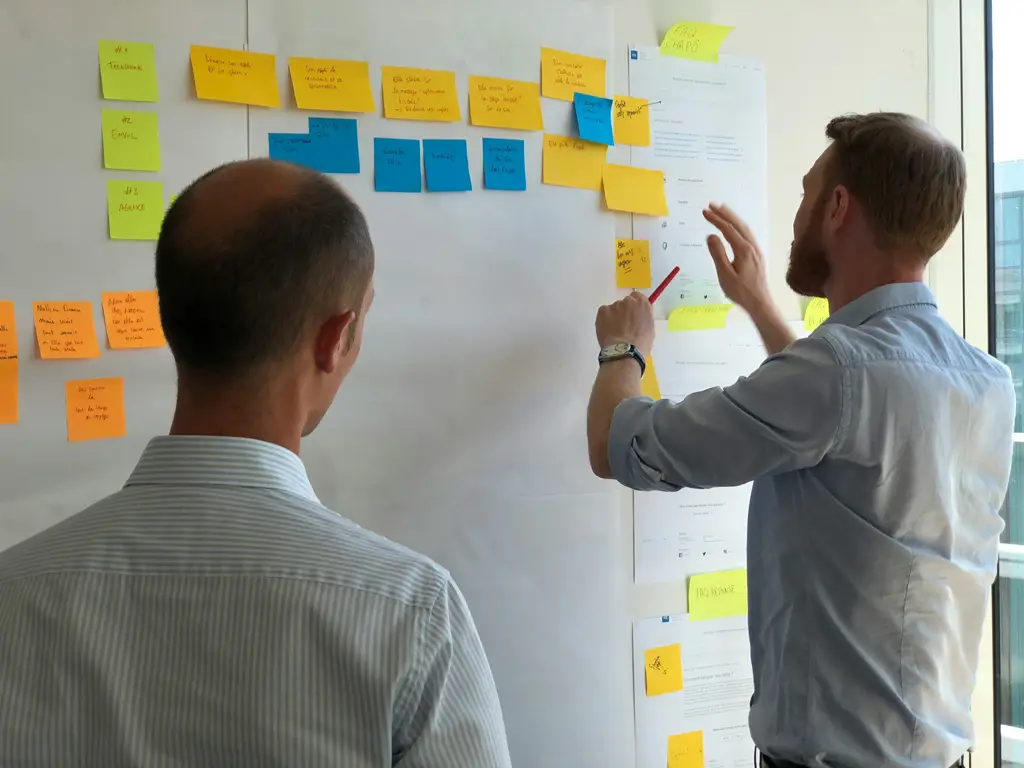
Transform Customer Pain Points into Strategic Opportunities
One of the most common mistakes organizations make after completing a journey map is immediately jumping into solution mode.
Before investing in new features, redesigns, or technology initiatives, organizations should first translate customer pain points into clearly defined opportunities.
At UpTop, we often facilitate collaborative workshops that bring together business stakeholders, operational leaders, customer-facing teams, technology partners, and subject matter experts. These sessions help uncover the root causes behind customer friction and ensure that improvement efforts address underlying challenges rather than surface-level symptoms.
A useful technique is developing “How Might We” statements that reframe problems as opportunities for innovation and improvement.
For example:
Customer challenge: Customers frequently contact support to check the status of a service request.
How Might We statement: How might we provide proactive visibility into service request status so customers can self-serve with confidence?
The shift may seem subtle, but it creates a more productive foundation for problem-solving.
Today, organizations also have access to richer sources of insight than ever before. Journey map findings can be strengthened by combining:
- Customer interviews and research
- Product analytics
- Support center data
- Customer satisfaction metrics
- Employee feedback
- Behavioral insights from digital platforms
AI-enabled analysis tools can help identify patterns across these data sources, but organizations should remain focused on understanding the human context behind the data. Effective modernization begins with empathy, not automation.
Prioritize Opportunities Based on Impact
Not every opportunity uncovered during journey mapping deserves immediate investment.
Successful organizations establish clear prioritization frameworks that balance customer value, business impact, technical feasibility, and organizational readiness.
This is particularly important when modernizing complex digital ecosystems that may include legacy applications, customer portals, internal tools, service platforms, and third-party integrations.
Techniques such as affinity mapping and collaborative prioritization workshops can help teams identify recurring themes and high-value opportunities.
Questions worth asking include:
- Which issues create the greatest friction for customers?
- Which challenges increase operational costs?
- Where are employees spending unnecessary time on manual processes?
- Which improvements could increase adoption or engagement?
- Which opportunities align with strategic business goals?
The objective is not to create a long list of improvements. It is to identify the initiatives that will create measurable value across customer experience, operational efficiency, and organizational performance.
Move Beyond Ideation to Experience Modernization
Once priorities are established, teams can begin exploring solutions.
This stage often reveals an important truth: many customer experience challenges are symptoms of larger organizational issues.
A confusing onboarding experience may be tied to fragmented systems. Slow response times may stem from manual workflows. Poor self-service adoption may result from inconsistent information architecture or disconnected service channels.
Addressing these challenges requires more than interface design.
Organizations increasingly need cross-functional teams that bring together research, UX strategy, design, product thinking, development, and operational expertise.
The strongest solutions often emerge when teams consider the entire experience ecosystem, including:
- Customer-facing experiences
- Employee workflows
- Internal systems and tools
- Service delivery processes
- Data and technology infrastructure
This broader perspective helps ensure that improvements are sustainable and scalable rather than isolated fixes.
As AI capabilities become more integrated into enterprise platforms, organizations should also evaluate where intelligent automation, personalization, or decision support can improve experiences. However, AI should enhance human workflows rather than introduce new complexity.
Without thoughtful UX design and operational alignment, AI can create confusion, erode trust, and reduce adoption.
Validate Before You Build
One of the most effective ways to reduce risk during modernization initiatives is through prototyping and validation.
Before committing development resources, organizations should test assumptions with customers, employees, and stakeholders.
Prototypes help teams:
- Evaluate new workflows
- Validate user needs
- Identify usability issues early
- Build stakeholder alignment
- Accelerate decision-making
- Reduce costly rework
The fidelity of a prototype should match the questions being explored.
In some cases, simple wireframes are sufficient to validate a workflow. In others, interactive prototypes may be necessary to evaluate complex service experiences or enterprise applications.
Regardless of format, validation should focus on learning.
Questions to consider include:
- Does the solution solve the identified problem?
- Is the experience intuitive and accessible?
- Can users complete critical tasks efficiently?
- Does the proposed workflow fit operational realities?
- Will the solution scale as the organization grows?
Modern testing platforms and analytics tools provide valuable behavioral insights, but qualitative feedback remains essential for understanding why users behave the way they do.
The most successful modernization initiatives combine both quantitative and qualitative research throughout the process.
Treat Journey Maps as Living Strategic Assets
Customer expectations continue to evolve. New technologies emerge. Business priorities shift. Service models change.
As a result, customer journey maps should never be treated as static deliverables.
Organizations that achieve lasting success use journey maps as living strategic assets that guide continuous improvement efforts over time.
Regular updates help teams:
- Monitor evolving customer expectations
- Track improvements against business outcomes
- Identify emerging friction points
- Align cross-functional initiatives
- Support product and service innovation
- Inform future technology investments
Journey maps become even more valuable when paired with ongoing product discovery, customer research, analytics, and operational performance metrics.
When integrated into organizational decision-making, they provide a shared framework for evaluating priorities and measuring progress.

From Insight to Transformation
A customer journey map should not end with documentation. Its greatest value comes from what happens next.
For organizations navigating digital transformation, journey maps provide a critical bridge between customer needs and business strategy. They reveal where legacy systems, disconnected workflows, and outdated experiences are creating friction, and they help teams prioritize modernization efforts that deliver measurable results.
When combined with research, UX strategy, design, and modern development practices, journey mapping becomes more than an exercise in understanding customers. It becomes a catalyst for building better products, improving service delivery, increasing adoption, and creating experiences that scale with the business.
The organizations that gain the most value from journey mapping are not the ones that complete the artifact. They are the ones that use it to continuously evolve the experiences, systems, and services that power their business. Let’s Talk.