

Ideation Workshop     

Generate Better Ideas, Explore New Possibilities, and Align Teams Around Future Opportunities

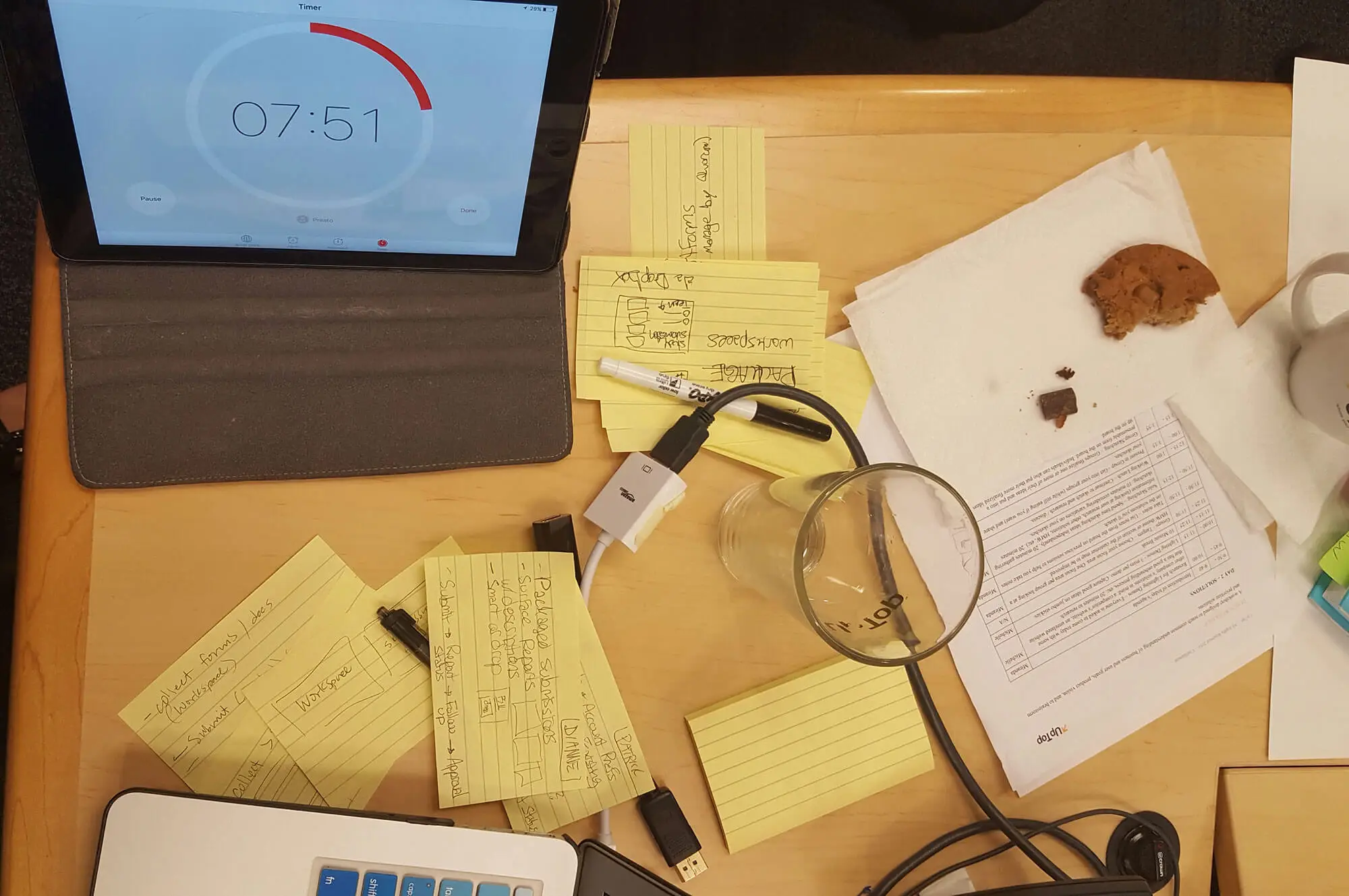
Ideation Workshops help organizations generate innovative ideas, challenge assumptions, and align stakeholders around opportunities that drive meaningful business outcomes.
Whether you're exploring a new product, improving a customer or employee experience, modernizing internal workflows, or evaluating where AI can create value, successful innovation starts with bringing the right people together to think differently.

Many organizations struggle to move beyond familiar solutions because teams work in silos, stakeholders approach problems from different perspectives, or existing assumptions limit creative thinking. Without a structured process for exploration, promising opportunities are overlooked, priorities become fragmented, and teams struggle to build momentum.

UpTop facilitates collaborative Ideation Workshops that combine strategic facilitation, human-centered design, UX strategy, product thinking, and business insight to help organizations uncover new opportunities, evaluate possibilities, and build shared alignment around the ideas with the greatest potential. The result is a prioritized vision that enables confident decision-making and lays the foundation for successful modernization initiatives.

The Challenge

Innovation rarely happens by accident. Organizations need structured opportunities to step outside day-to-day operations, challenge existing assumptions, and explore new ways to create value for customers, employees, and the business.

Without a collaborative process for generating and evaluating ideas, teams often default to incremental improvements instead of discovering transformative opportunities. Different departments may approach problems from competing perspectives, making it difficult to build consensus around where to invest.

As organizations pursue modernization, AI adoption, new digital products, or service improvements, the ability to rapidly generate, refine, and prioritize ideas becomes increasingly important.

Ideation Workshops provide a structured environment where organizations can think creatively, evaluate possibilities, and build consensus around ideas that are both innovative and achievable.

Common challenges include:

  • Teams struggle to move beyond familiar solutions.
  • Innovation efforts lack structure or clear direction.
  • Stakeholders have competing ideas and priorities.
  • Opportunities are identified but never evaluated or prioritized.
  • Departments work independently with limited collaboration.
  • Existing assumptions limit creative problem-solving.
  • Product and modernization initiatives begin without exploring alternatives.
  • Teams lack alignment around the strongest opportunities.

Benefits of Ideation Workshops

Benefits of Ideation Workshops

Generate innovative ideas that address real business challenges
Encourage cross-functional collaboration and diverse perspectives
Challenge assumptions that limit innovation
Identify opportunities for products, services, workflows, and experiences
Align stakeholders around a shared future vision
Prioritize ideas based on business value and feasibility
Reduce uncertainty before investing in design or development
Create momentum for modernization and innovation initiatives

Our Approach

Our Approach

01

Understand the Opportunity

Review business goals, customer or employee needs, existing research, and organizational challenges to define the problem space and establish clear workshop objectives.
02

Explore Possibilities

Facilitate structured ideation exercises that encourage participants to generate a broad range of ideas, challenge assumptions, and think beyond existing constraints.
03

Build on the Best Ideas

Collaboratively evaluate concepts, combine complementary ideas, identify patterns, and refine opportunities that align with organizational priorities and user needs.
04

Prioritize Opportunities

Assess ideas based on business impact, customer value, technical feasibility, organizational readiness, and strategic alignment to identify the strongest opportunities.
05

Define Next Steps

Document prioritized concepts, recommended initiatives, ownership, and actionable next steps that help teams transition from ideation to planning and execution.

Deliverables May Include

Deliverables May Include

Workshop Planning and Facilitation
Ideation Session Outputs
Opportunity Areas and Themes
Business Opportunity Assessment
Experience Improvement Opportunities
Opportunity Prioritization Framework
Concept Sketches or Experience Maps (when applicable)
Action Plan and Next Steps

UpTop Workshop Comparison

UpTop Workshop Comparison


Alignment Workshop Ideation Workshop
Primary Purpose Align stakeholders around shared goals, priorities, and decisions Generate, explore, and refine ideas for solving business or user problems
Best Used When Teams have competing priorities or lack consensus Teams need innovative solutions, new concepts, or future-state ideas
Primary Outcome Shared direction and organizational alignment A portfolio of validated concepts and opportunities
Key Business Problem Misalignment slows decision-making and project execution Uncertainty about what solutions should be pursued
Focus Strategy, priorities, governance, and decision-making Creativity, innovation, problem-solving, and concept generation
Typical Participants Executives, business leaders, product, operations, IT, project sponsors Product managers, UX designers, customers, business stakeholders, SMEs, developers
Key Questions Answered What are we trying to achieve? What should we prioritize? How will we define success? What opportunities exist? What ideas should we explore? How might we solve this problem?
Facilitation Style Structured discussions, prioritization exercises, consensus building, decision frameworks Brainstorming, design thinking exercises, sketching, co-creation, concept evaluation
Activities Vision alignment, success criteria, prioritization, stakeholder mapping, decision-making Brainstorming, journey mapping, "How Might We" exercises, storyboarding, concept sketching
Typical Deliverables Alignment summary, decision log, priorities, success metrics, action plan, next steps Opportunity themes, concept sketches, solution ideas, prioritized concepts, innovation roadmap
Measures of Success Faster decisions, stronger alignment, reduced project risk, shared ownership Quantity and quality of ideas, stakeholder engagement, validated concepts, innovation pipeline
Ideal Engagement Timing Before planning, modernization, major investments, or transformation initiatives After discovery or research, before solution design or product development
Business Value Reduces organizational friction and enables confident execution Accelerates innovation and helps identify high-value solutions before investing
Relationship to UX Ensures business and stakeholder alignment before design begins Explores user-centered solutions that can be validated through UX research and design

Who This is For

Who This is For

Ideation Workshops are ideal for organizations exploring new opportunities, improving digital experiences, modernizing operations, or identifying innovative ways to solve business challenges.

They are especially valuable during the early stages of product planning, modernization initiatives, AI strategy, service design, or organizational innovation efforts where exploring possibilities before committing to solutions can reduce risk and improve outcomes.

This service is particularly valuable for organizations that want to:
  • Generate ideas for new products or services
  • Improve customer or employee experiences
  • Identify opportunities for AI and automation
  • Modernize business processes and workflows
  • Encourage cross-functional innovation
  • Explore strategic growth opportunities
  • Prioritize innovation investments
  • Build alignment around future initiatives

Case Studies

Case Studies

Why UpTop

UpTop approaches ideation as more than a brainstorming session. We create structured environments where creativity is grounded in business strategy, user needs, and practical execution.

By combining strategic facilitation, UX research, product thinking, and modernization expertise, we help organizations identify opportunities that are innovative, actionable, and aligned with long-term business objectives.

The result is a shared vision, stronger organizational alignment, and a prioritized set of opportunities that position organizations to move forward with confidence.

Frequently Asked Questions

Frequently Asked Questions

Ideation Workshops are useful when a team needs fresh approaches to a business, product, service, or customer experience challenge. They can support new initiatives, modernization efforts, product development, experience improvements, or situations where existing approaches are no longer producing the desired results.

Participants depend on the challenge but often include representatives from product, UX, technology, operations, marketing, customer experience, and business leadership. Bringing together different perspectives typically produces a broader and more useful range of ideas.

Brainstorming is usually focused primarily on generating ideas. An Ideation Workshop uses structured facilitation to define the challenge, generate possibilities, explore and refine concepts, evaluate alternatives, and identify the ideas that deserve further consideration.

UpTop guides participants through a structured process that may include defining the opportunity, reviewing relevant insights and constraints, generating ideas, combining and refining concepts, evaluating possibilities, and prioritizing the strongest opportunities.

Ideas are explored in the context of business objectives, user needs, technical considerations, organizational constraints, and other relevant criteria. The goal is to encourage creative thinking while still identifying concepts that have meaningful potential.

Outputs may include documented ideas, refined concepts, prioritized opportunities, workshop artifacts, evaluation criteria, and recommended next steps. The specific deliverables depend on the goals and scope of the workshop.

Yes. Ideation can help teams rethink outdated experiences, processes, services, and technology rather than simply reproducing existing approaches in a newer system. It creates space to explore what a better future experience could actually look like.

Not necessarily, although relevant research can make the workshop stronger. Existing customer insights, analytics, stakeholder knowledge, competitive information, or previous research can provide useful context and help participants focus ideas on real needs and opportunities.

The strongest ideas can move into further evaluation, research, prototyping, validation, prioritization, or planning. The workshop is designed to produce useful opportunities that can inform what the team does next, rather than simply generating a collection of ideas.

Let's Talk

Let's Talk